
Context
As a designer, sometimes stepping out of regular work and doing some experimental projects is fun, inspiring, and thought-provoking. This project is about how I applied design thinking to solve the problems I met outside work. Since I was a plant person, I often used a popular plant identifier app called Xingse(形色) to help me identify plants. However, the user experience of this app was kind of frustrating. Therefore, I set a one-week design challenge for myself to dive deep into the problem and redesign the core experience.
Note: This was a personal concept project (a one-week design challenge) and had nothing to do with the Xingse official team. I took on all the essential roles when redesigning the core experience: researcher (conducting secondary research), product designer (framing problem, iterating on solutions and designing UX&UI), prototyper (prototyping and testing).
OUR MISSION
We want to connect people with the amazing nature around us.
HOW MIGHT WE GET THERE
We aim to help people bring a touch of nature inside and build an emotional attachment to plants.
A QUICK GLANCE
Existing Product Overview
Xingse was one of the most popular plants identifier tools in the Chinese Market since 2017. It had an increasing number of users and had a big potential market since house plants became popular in China. Here was the key features at that time:
1. Identify plants by taking or uploading photos.
2. Share photos by overlaying Chinese poems.
3. Discover the plants around you and generate a trip journal for you.
4. Recommend beautiful plant-related wallpaper.
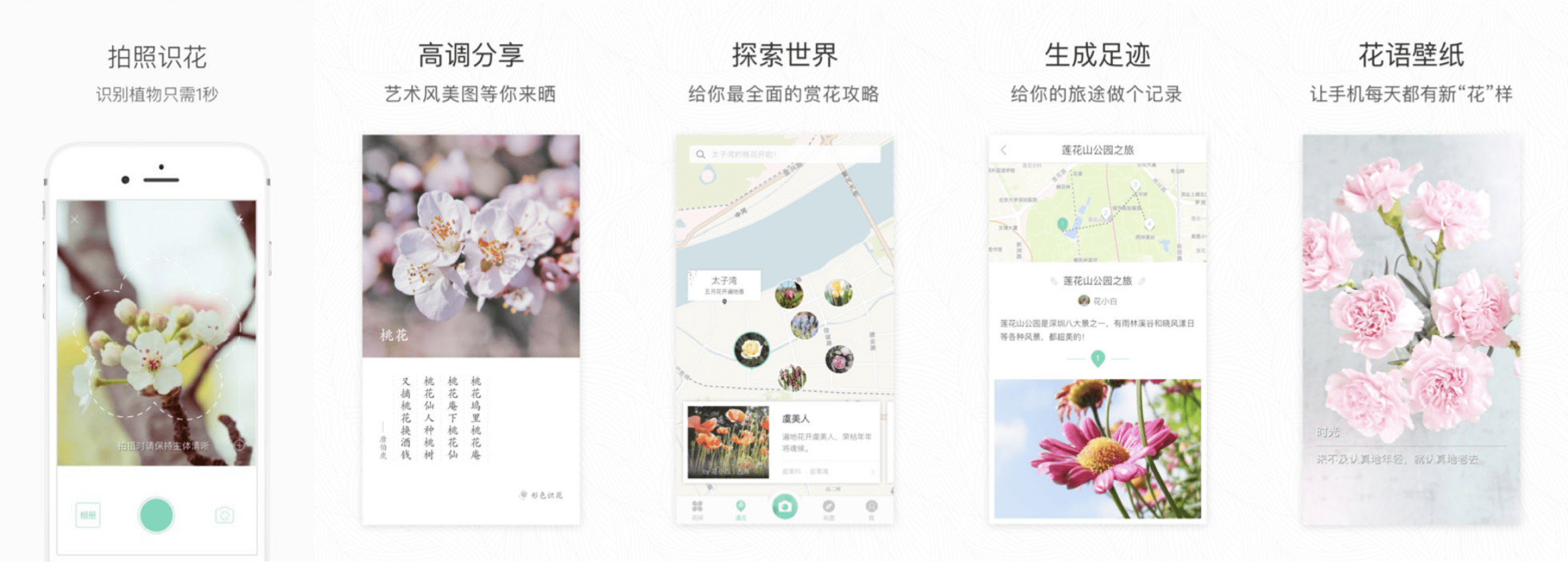
Xingse: A Popular Plant Identifier Tool in Chinese App Market
OPPORTUNITIY
A Blooming Industry of Houseplants
Through research, we have seen houseplant sales are steadily rising, and younger generations are leading the charge toward plant parenthood and “urban jungles” since 2015 in China. Houseplants have taken social media by storm, a place where plant lovers share plants photography, share care tips, and inspire each other. Houseplants are becoming a blooming industry. How might we serve the needs of plants persons to drive engagement and retention for the Xingse product?
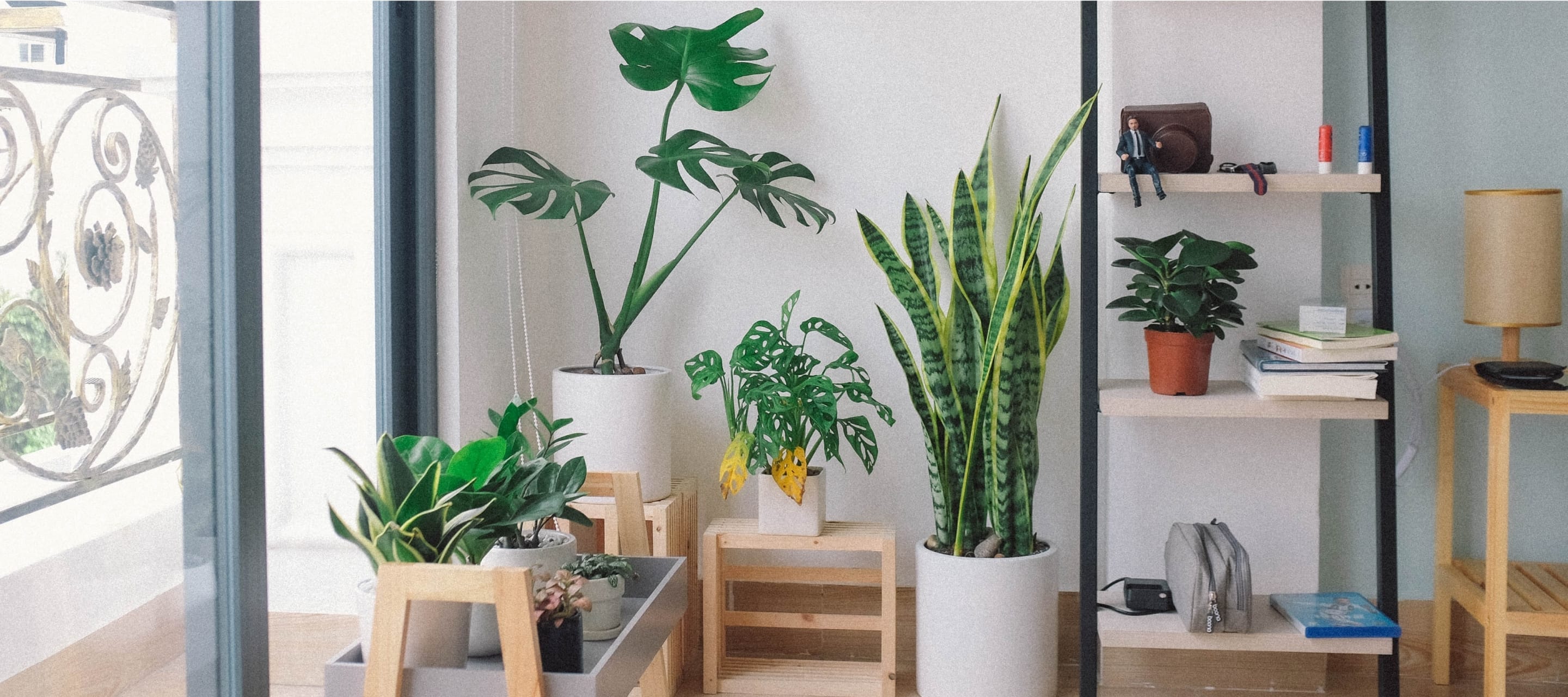
Houseplant Boom
RESEARCH
Define What Problem is Worth Solving for
Instead of jumping into the problems and solutions directly, I stepped back to focus on the research which has been made on Xingse itself and tried to define what problem is worth solving for. Questions I brought into the research session:
• From the business perspective: what are their business problems or challenges?
• From the user perspective: what are the existing user groups and what are their motivations for using this app?
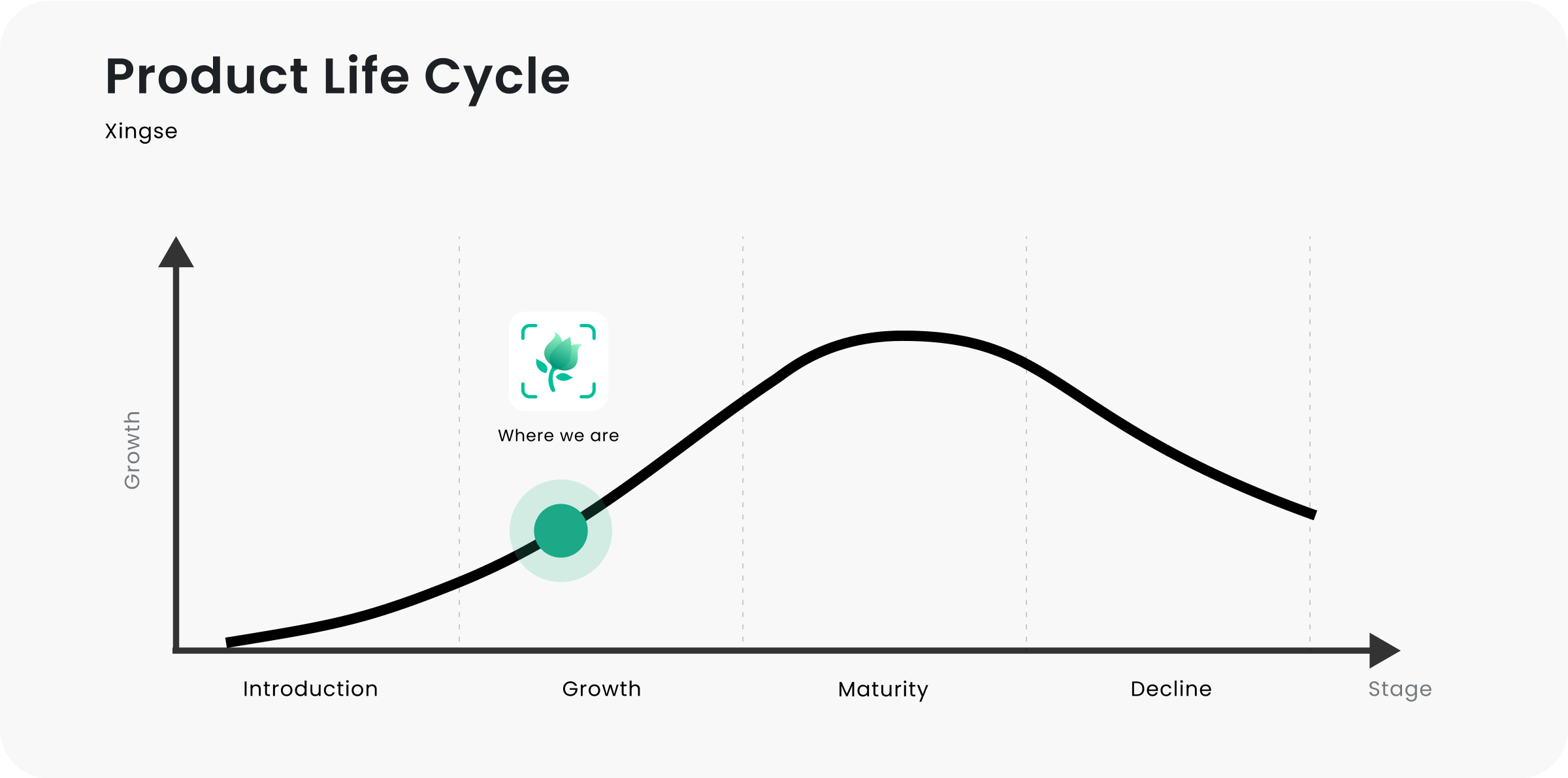
Business Challenge: Drive Engagement in the Growth Stage
To identify a plant, open Xingse and take a photo, the app would tell you what it is immediately. This app attracted a great number of users to download when first introduced to the market in 2015. However, getting users over the line was not enough. According to an interview of XingSe CEO in 2017, even though the number of new users kept growing, the retention rate of existing users kept low.
How to implement innovative strategies to drive engagement, retention, and ultimately long-term growth became the biggest business challenge at that time.
Identify Power User: Plant Savvy
Based on a general report about plant lovers, we clarified three major user groups had been using a plant identifier app. Each group had its own needs. Who could be the power user of this app that could possibly keep coming back to the app? Compared with general plant hobbyists and kids’ parents who only used this app occasionally (when they spotted a plant in the wild or on hiking), the plant savvy was more likely to keep using it as they had more contact points with plants every day (checking in and taking care of their own plants). As a result, we targeted Plant Savvy as our power users because they had a big potential to drive engagement.
Kids' Parent
• They use this app when they have nature walks and family hikes. They purposefully set out to practice identifying plants they come across with their kids.
• Their motivation is to educate their kids on learning more about plant life in general.
Plant Hobbyist
• A Plant Hobbyist is curious about plants and has an interest in getting acquainted with some plants.
• They use this app when they spot a beautiful plant in the wild or in front of their neighbor’s yard.
• Their motivation is to get acquainted with some plants, such as their names and features.
Plant Savvy
• A Plant Savvy loves plants for their own sake and knows how to cherish them and grow them.
• They use this app when they browse plants in stores, grow plants or take care of plants.
• Their motivation is to get practical information in the plant world and share the joy with the community.
THE PROBLEM
Frame People Problem
“ As a plant savvy, I want to get practical tips and share growth of plants so that I can care for houseplants effortlessly and connect with communities emotionally.”
DESIGN THINKING
Existing User Journey Map
We broke down the problem by outlining a typical user journey of plant persons. In the first two stages of the journey, Xingse made it so easy for a plant savvy to identify plants with a snap. But in the following three stages, there were three major pain points.
• I need to go through many information sources. There is no single place for me to get the information I want.
• I need to jump back and forth between apps to gather information. It is time-consuming and cumbersome.
• It's hard to resonate with others by sharing on these social media. Few of my friends love plants as enthusiastic as me, so only a few of them can truly understand my joy.
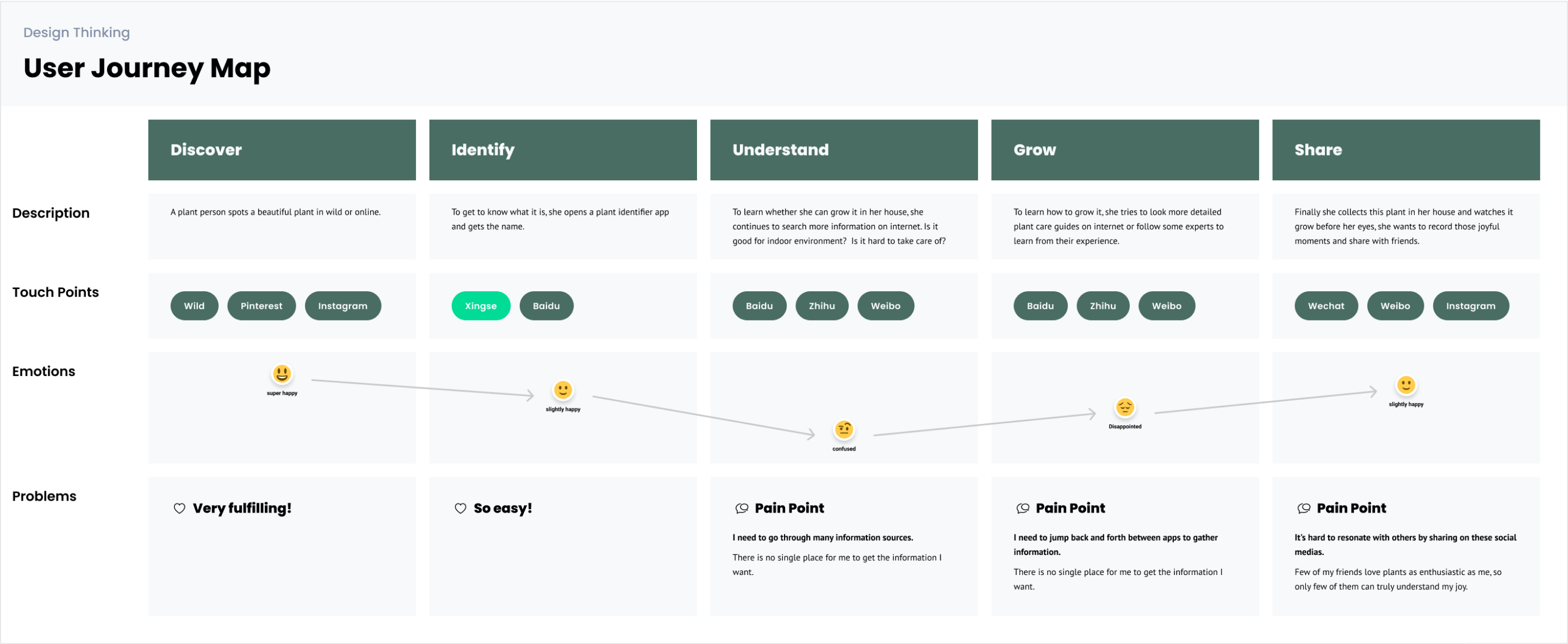
Existing User Journey Map
DESIGN THINKING
Redesign the Experience Map
To solve the problem, I reimagined the overall plant identification and growing experience map, and how the new app could fit into it. There are three major use cases:
• After identifying a plant, how might we know whether the plants fit into my house?
• How might we learn how to grow the plants?
• How might we share the growth and emotion with the community?
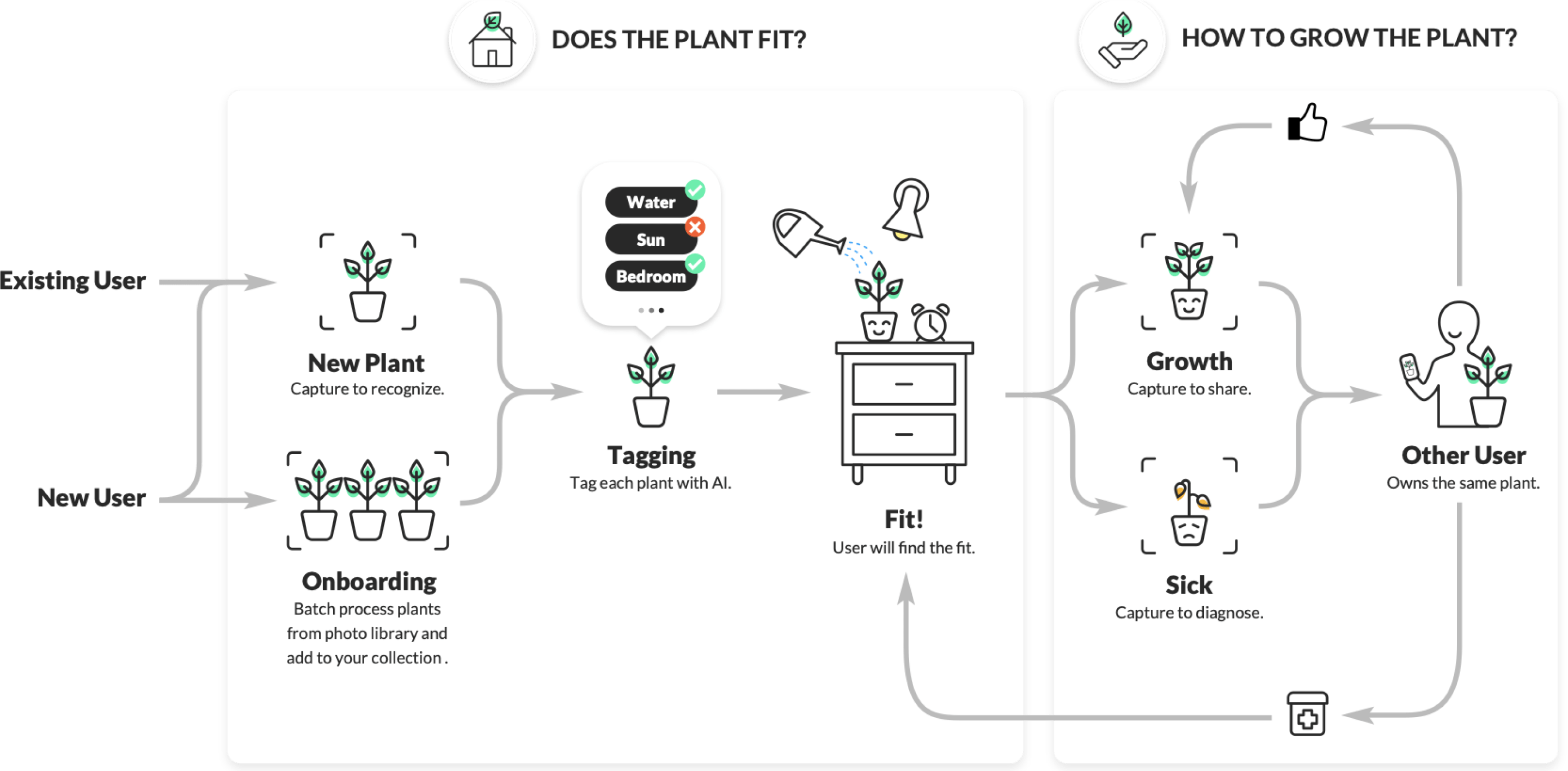
New User Journey Map
DESIGN DEEP DIVE
Scenario 1: Identify and Understand
This is the case when a plant savvy spots a beautiful plant in the wild (or online) and tried to figure out what it is and whether it fits into his house. They want to get necessary information about the plant and its caring environment so they can make decisions on whether they can grow.
Design Break Point
I recalled my painful experience of gathering information about a type of plant on the internet. I often search the name of that plant, plus a certain series of keywords. For example, I will search ‘monstera + sunlight’ to understand whether I should keep it under sunlight or in the shade. However, what I got in the search result was usually long pieces of text, containing too much more information than I need to know. I would have to scan through the articles to locate the information that I am looking for. But what I really need was that it simply told me “Monstera doesn’t like sunlight”.
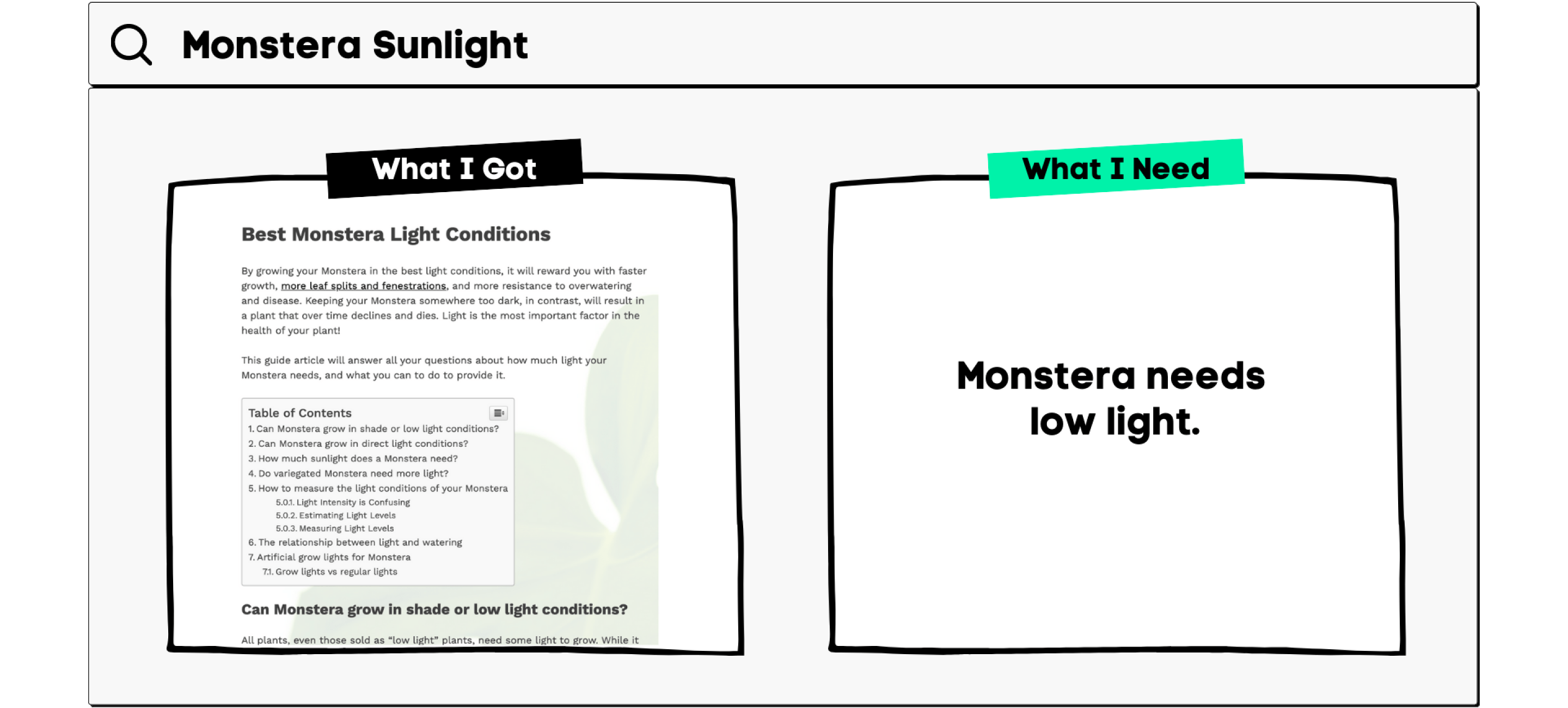
Search A Plant on Internet
My Solution
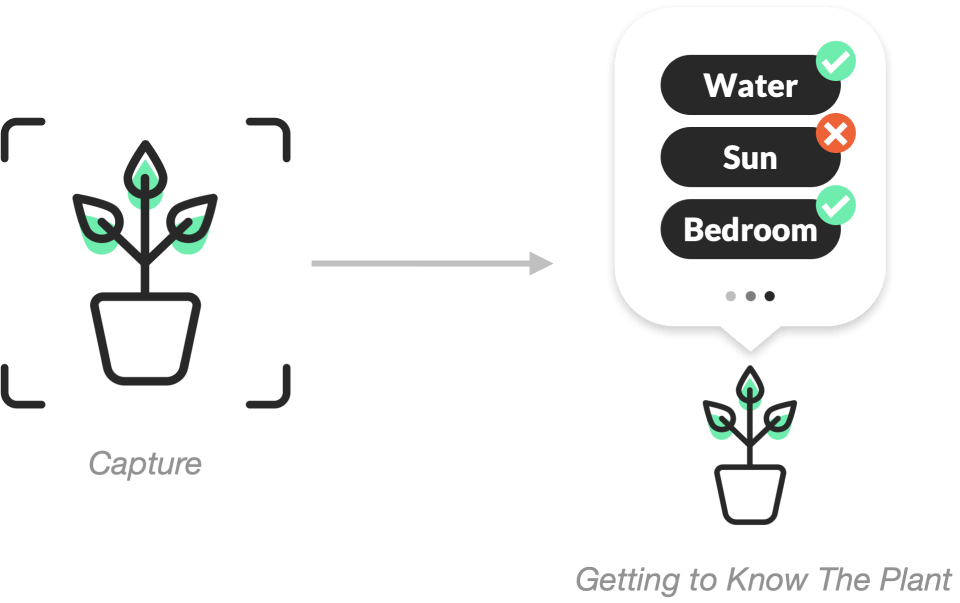
Xingse has a powerful algorithm to identify a plant by simply taking a photo of any plant. On top of that, my solution is providing more context information that users care most in the result page, all at a glance.
End Result
Before: The current search result page only shows you a name and some similar photos to let users select which one is the plant they are looking for.
After: Provide more context information that users care about most on the result page, all at a glance.
• Add a similarity rate for each result and help the user locate which one is the best match.
• Add some tags to show the typical features of this plant, such as growth habits, trends, and benefits.
• Swipe up to show a dashboard, a guide to watering, lighting, fertilizing for plants.
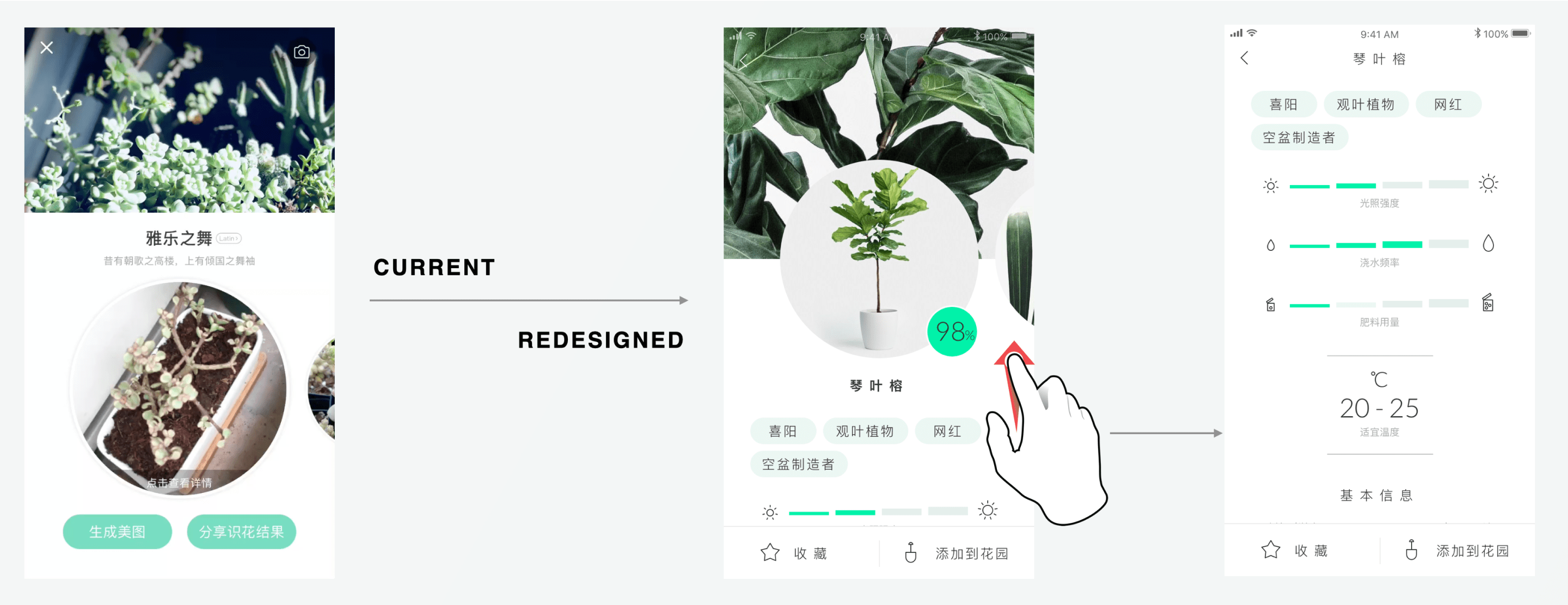
Redesign Search Result
DESIGN DEEP DIVE
Scenario 2: Grow and Share
This is the case that a plant person loves to grow things and shares their harvest. They want to exchange knowledge and look for suggestions when they meet plant-related problems. They want to share their love of plants and resonate with people sharing similar interests.
Design Break Point
Currently, I like to share my houseplant photos on WeChat Moments, but only a few of my friends are plant lovers, so only part of them could truly understand my joy.
However, if there is a houseplant lovers community where people are generous with information and sharing, we would be able to find belonging and get more feedback with real emotions.
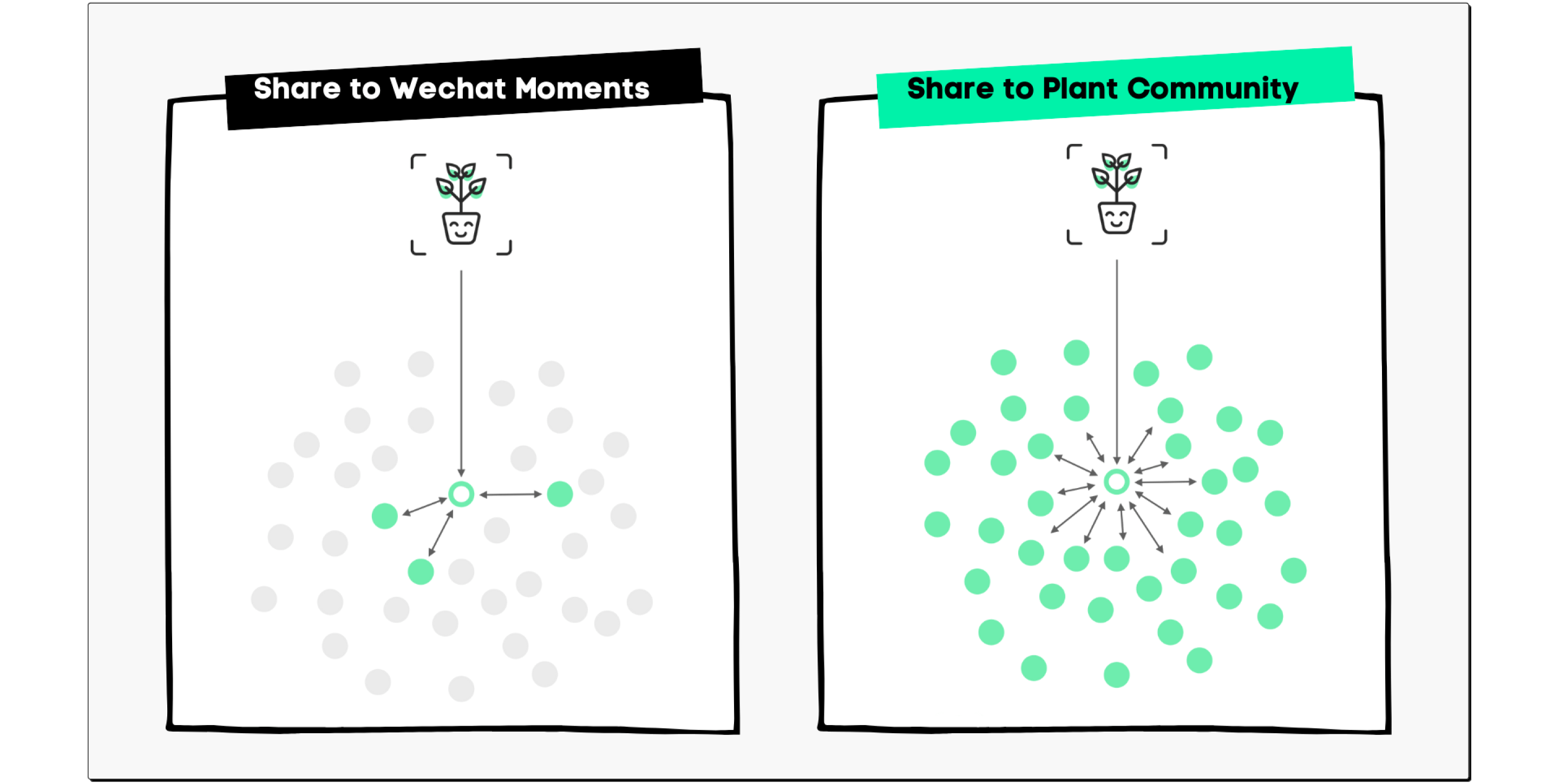
Share with Community
My Solution
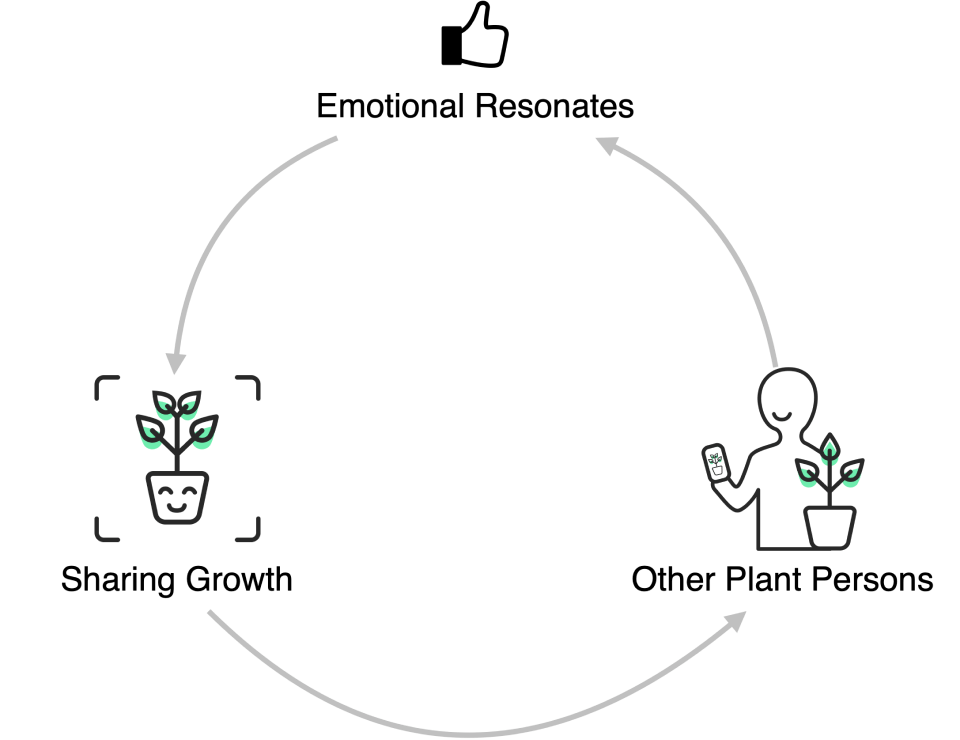
My solution is building a community for plant persons. It’s a place where they can bring plant-related problems and find someone eager to offer advice to them. It’s a place where they can share their harvest and joy with people who have the same enthusiasm.
End Result
Before: The current profile page only shows the photos you have taken before. It has few meanings for people to come back to this page.
After: Build a virtual garden with a digital collection of plants you grow in the physical world. Everyone can share their garden with others and visit others’ gardens (with permission).
• Build your garden by scanning the houseplants you have.
• Keep a journal for each plant as they grow up day by day.
• Share your journal or those joyful moments with the community.
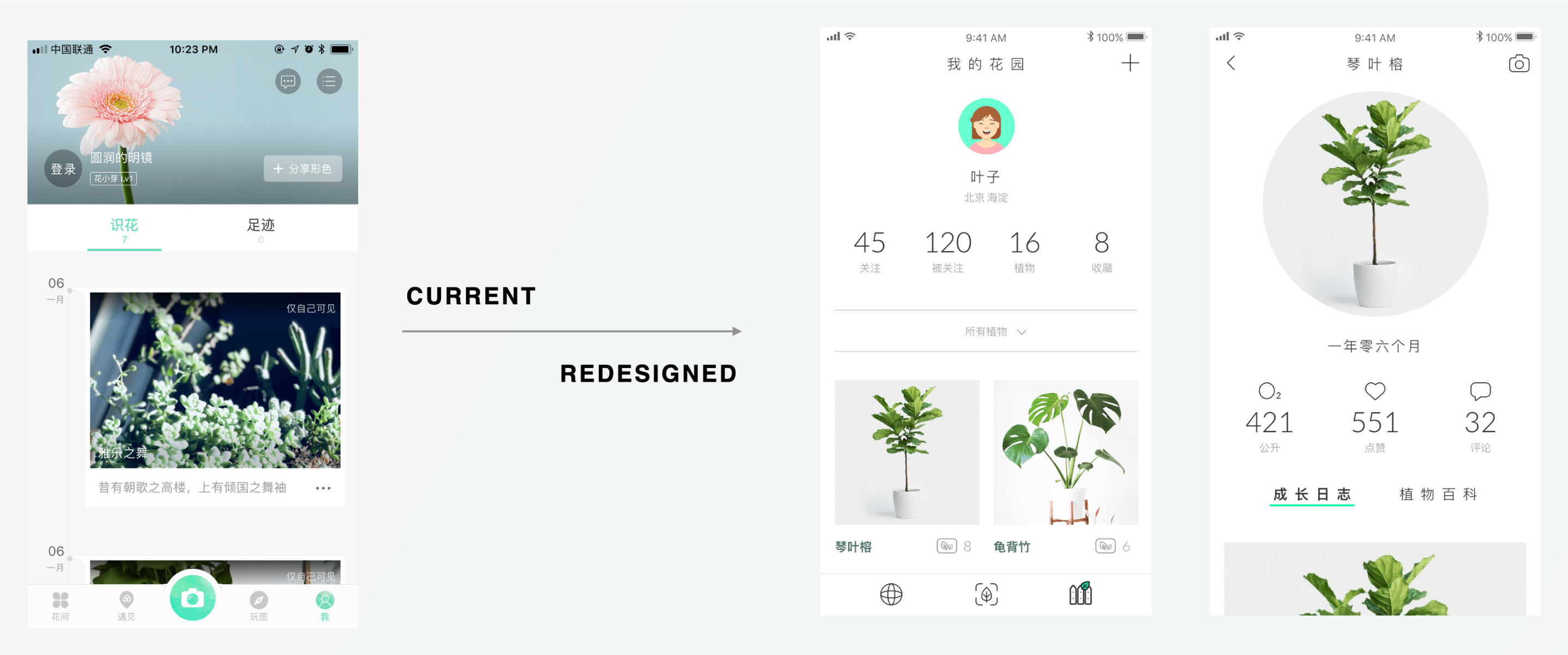
Redesign Profile Page
DESIGN DEEP DIVE
Restructure the Overall Experience
Based on the core experiences redesign above, I restructured the new app with three views plus one core feature.
• Explore View: Explore trending plants and build connections with plant lovers in the community.
• Garden View: Own a virtual garden with a digital collection of plants you grow in the physical world.
• Plant View: Keep a growth journal for each plant in Your Garden.
• Capture: Work as the core feature through the whole app.
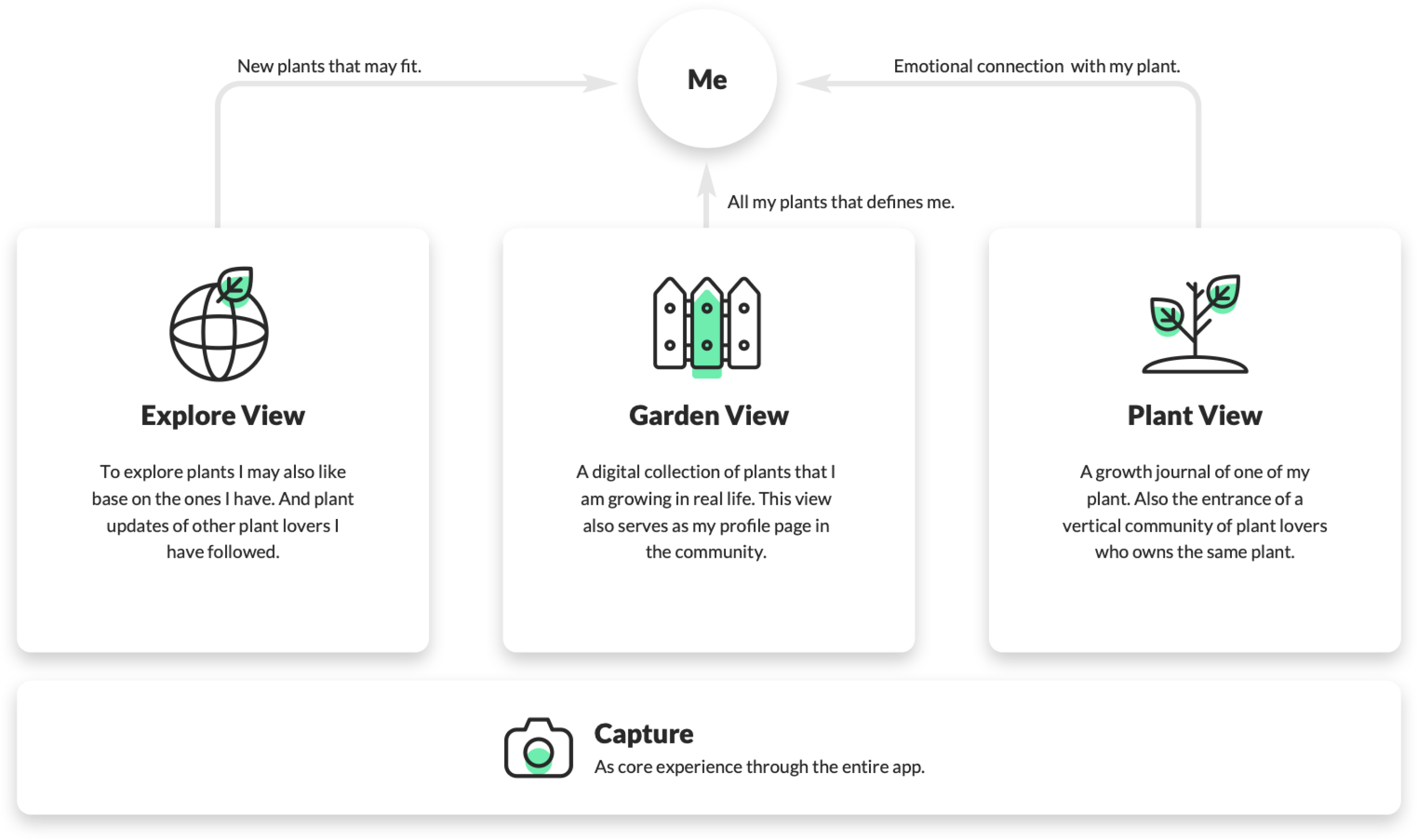
DESIGN OVERVIEW
Interaction Flow
Here is the interaction design of the key flow.
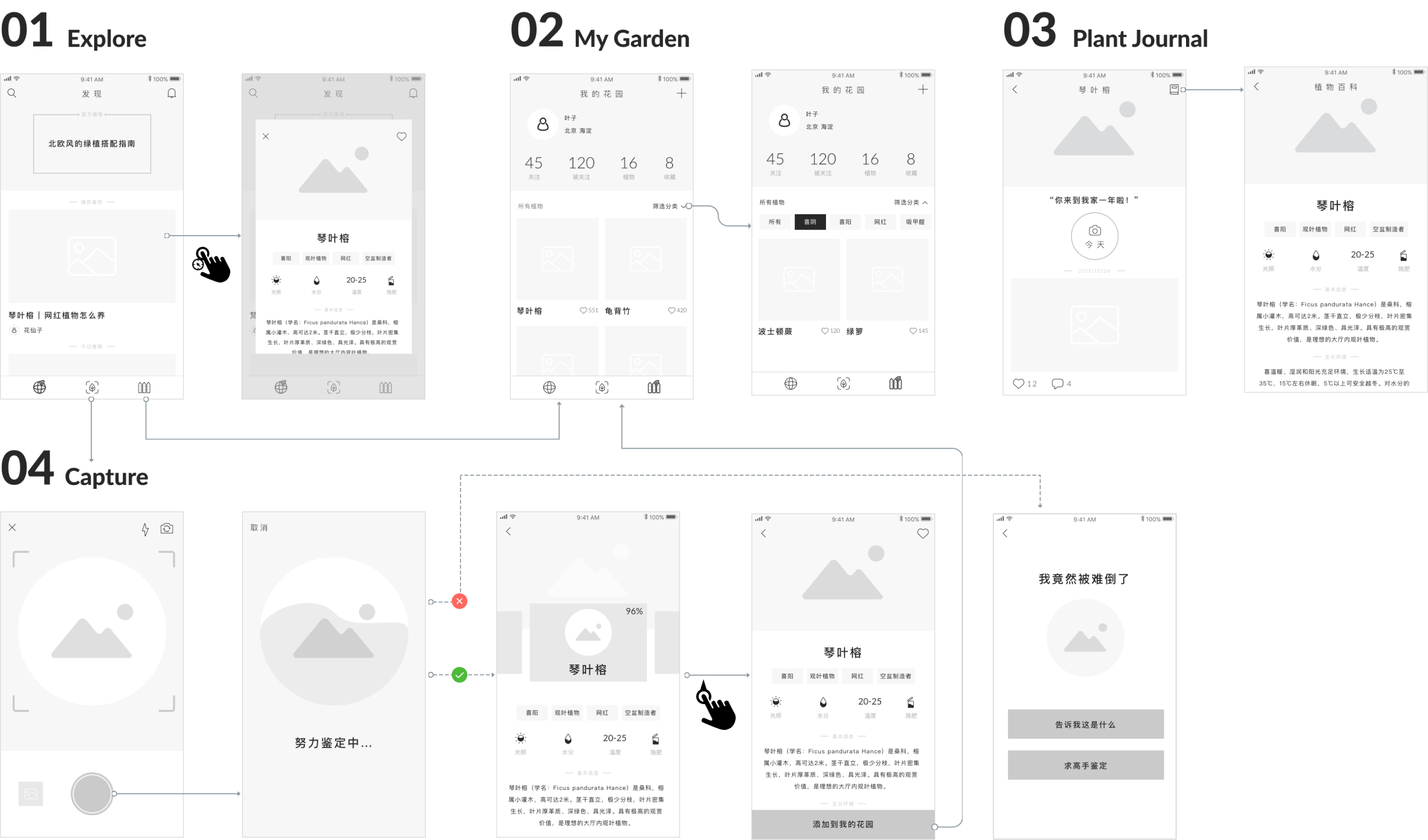
DESIGN OVERVIEW
Visual Design & Prototype
Here is the visual design of hero screens and a quick prototype to present the overall experience of the new design.
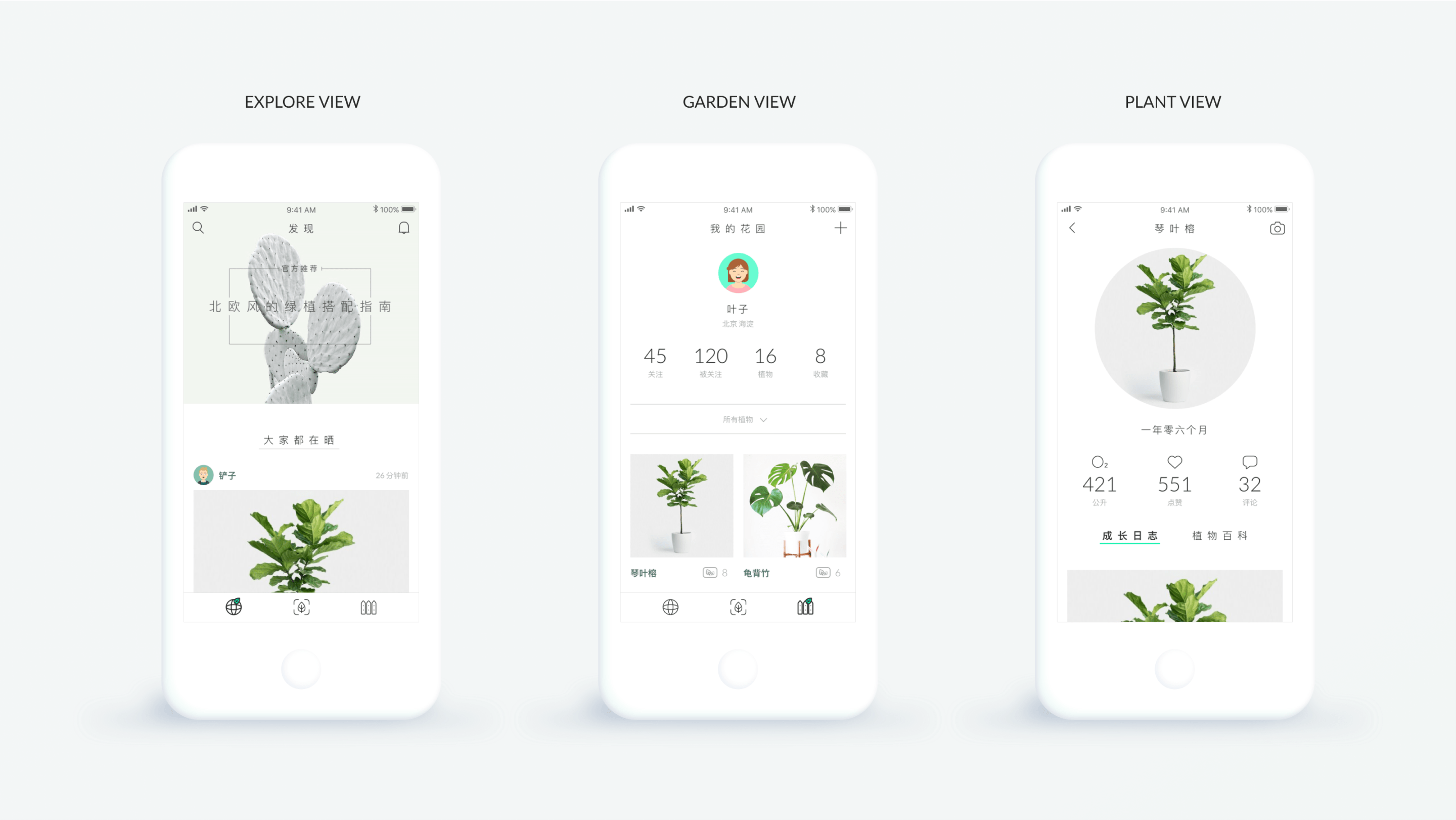
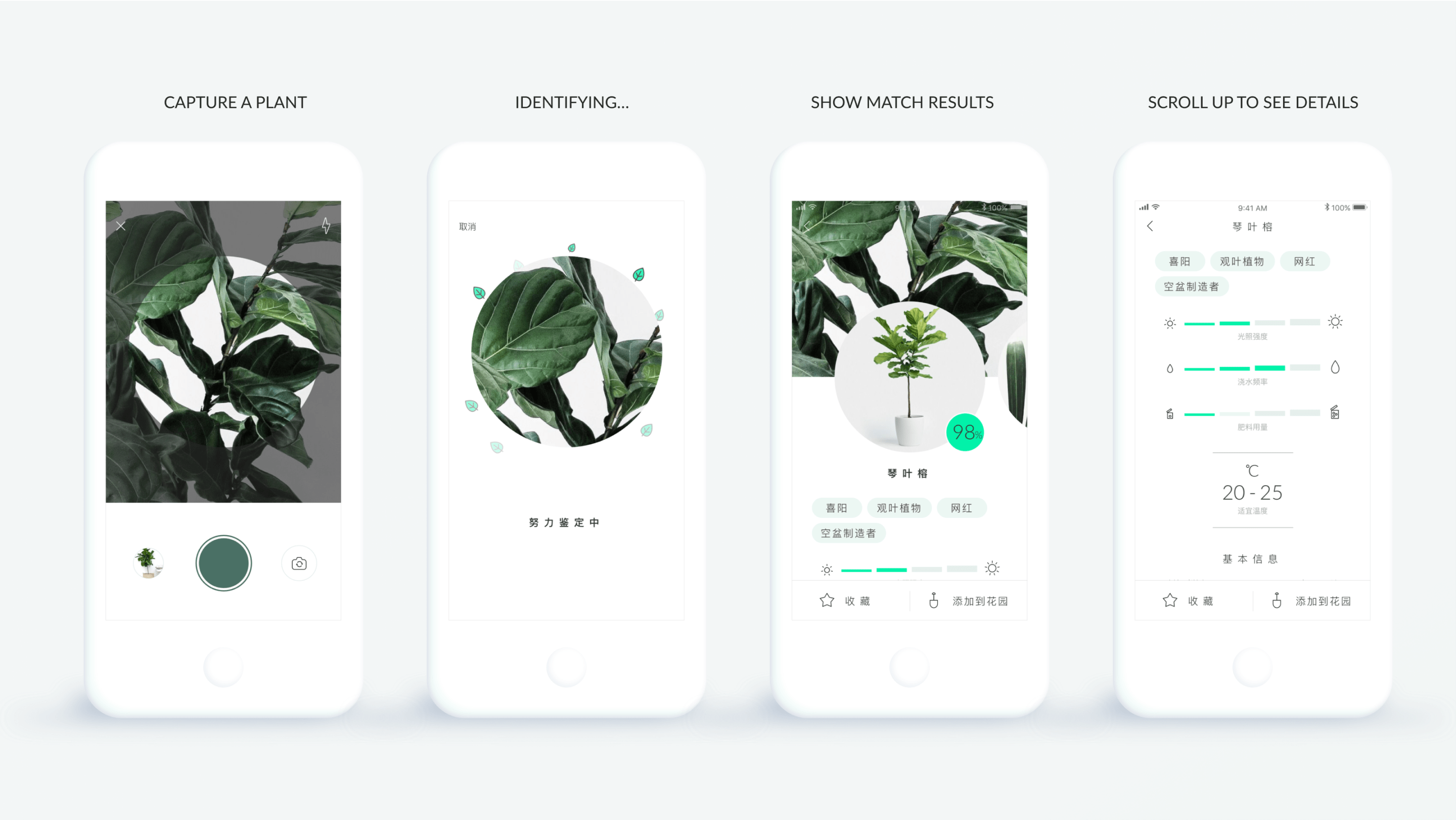
Prototype
A Walkthrough Demo
THE RESULT
How to Measure Success

From User Perspective
• Become the first choice to share plants.
• Increase the user retention rate.

From Business Perspective
• Develop new business models.
• Improve visual recognition AI.
Takeaways
Things I felt proud of:
• Apply design thinking to real-life challenges and explore how design might make our life better, from problem-framing, ideation, iteration to design craft.
• Stay curious, caring, and passionate. Follow our excitement and build a meaningful connections with the nature around us.
Things I wished I could do better:
• For the next steps, I would like to spend more time on user testing, design validation, and business consideration. Though this is just a prototype, the success metric is hard to measure, but in the long term, I would like to measure quantitatively and qualitatively from both user perspective and business perspective as above.