
(0→1: from concept to launch)
Project OVERVIEW
The Vision: Effortless 3D for Everyone
The rise of generative AI has changed how we write, draw, and animate — yet creating in 3D still feels like coding in a cave. It’s complex, technical, and painfully slow.
As demand for 3D content explodes across gaming, AR, and VR, we saw a clear opportunity:
What if anyone could create a 3D model just by describing it?
The Problem: 3D Creation Bottleneck
Traditional 3D tools like Blender and Maya are built for experts — making even small changes slow and intimidating.
• Professionals face long modeling timelines and slow iteration.
• Newcomers are locked out entirely by steep learning curves.
Our Solution: AI-Powered Creation Unlocked
We built SUDOAI, an AI-native web tool that empowers creators to create 3D models using simple text or image inputs. It made rapid 3D creation possible for everyone, from indie devs to first-time creators.
In just 3 months, we went from prototype to public launch. The product:
• Lowered the barrier to entry for anyone exploring 3D.
• Accelerated iteration for professionals and hobbyists alike.
The impact was immediate and measurable: within weeks of launch, users were generating 1K+ 3D models daily — a workflow that would have taken months with traditional tools.
THE Challenge — From Complex Research to Usable Product
Navigating the Arc of AI Technology
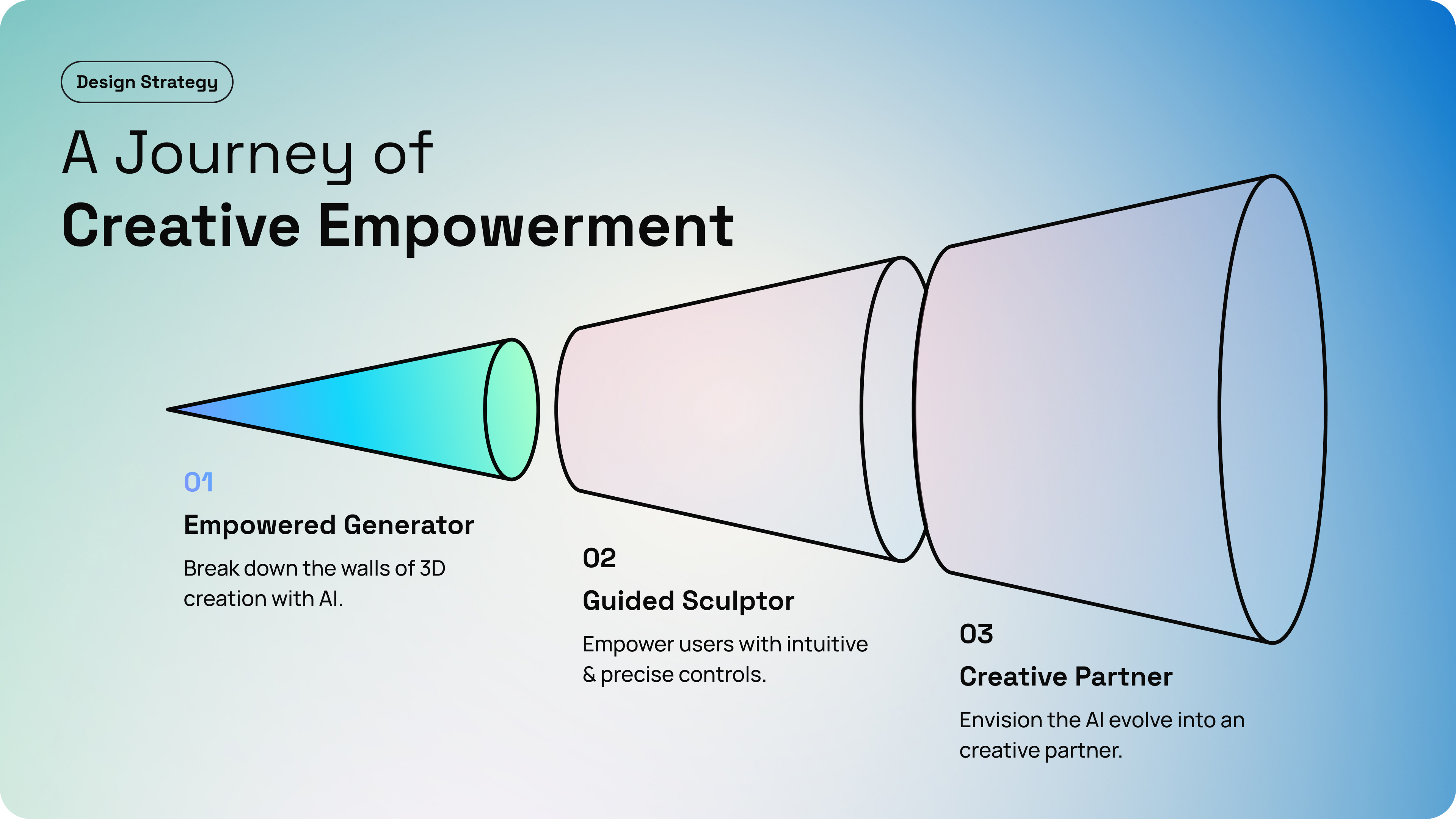
In the 0-1 phase of an AI product, design extends beyond features – it's about defining the product's essence while the underlying technology rapidly evolves. I defined the vision for SUDOAI not as a tool, but as a journey of creative empowerment tied to the anticipated "Arc of AI Technology.”
Design Deep Dive
Bring the Empowered Generator to Life
How might we turn complex 3D creation hurdles into a simple & magical first step for anyone with AI?
Stage 1
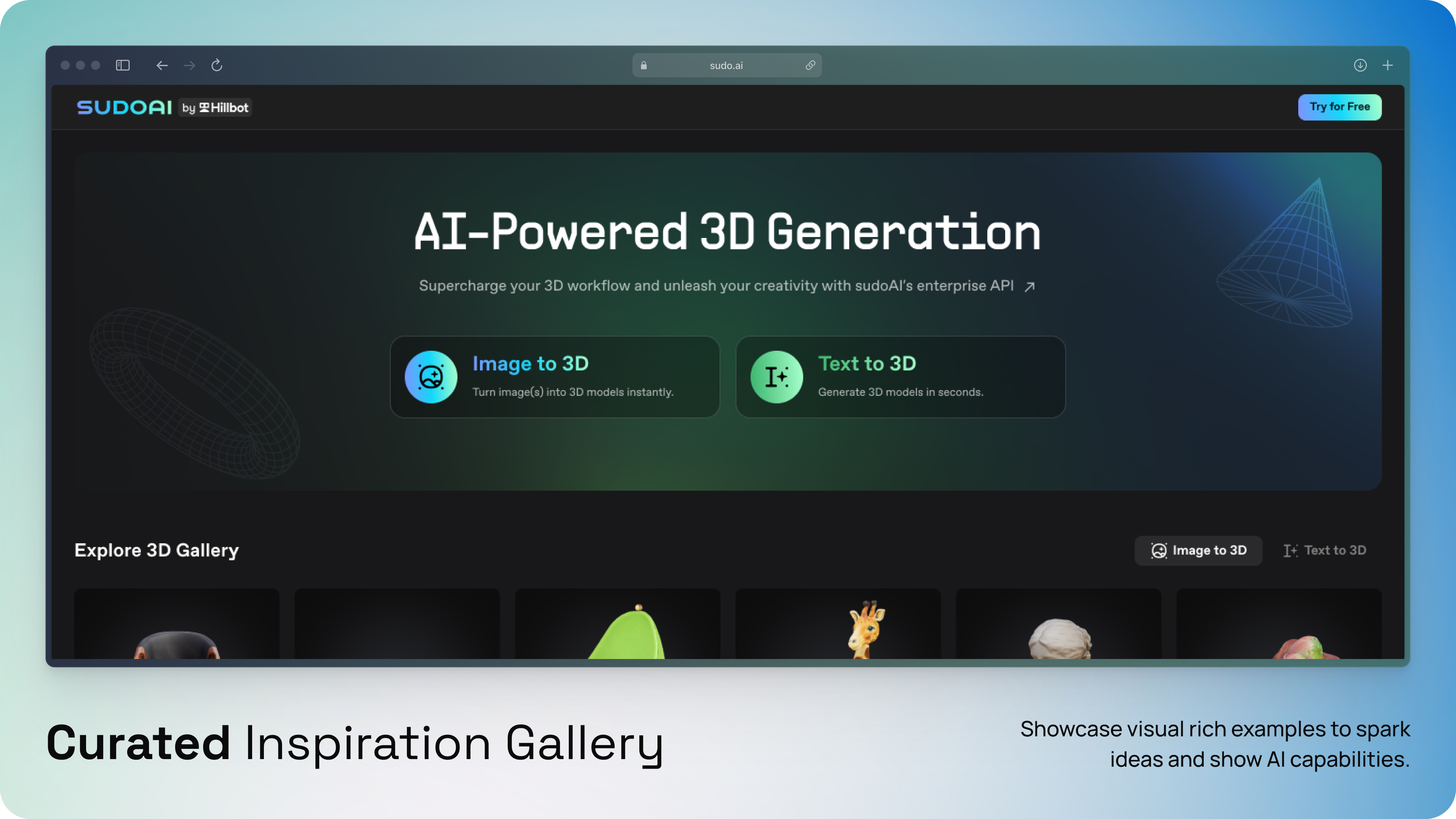
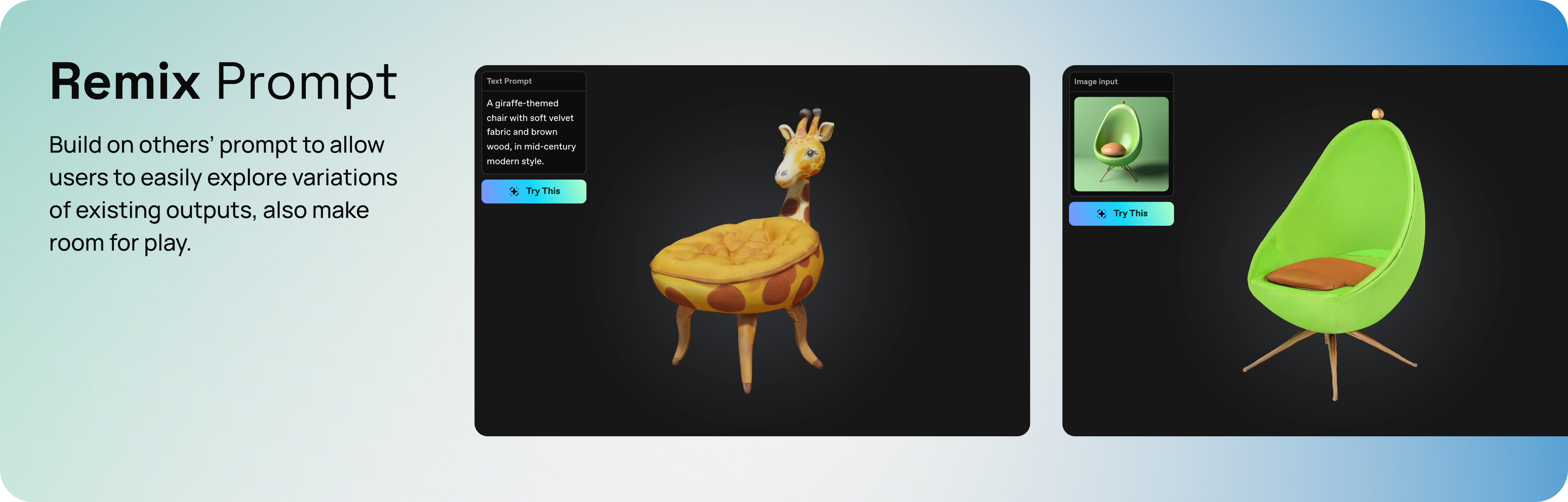
Activate — Sparking Ideas
Make the very first step inviting. Help new users quickly understand what's possible with AI-powered 3D and overcome the daunting "blank canvas" problem.
Stage 2
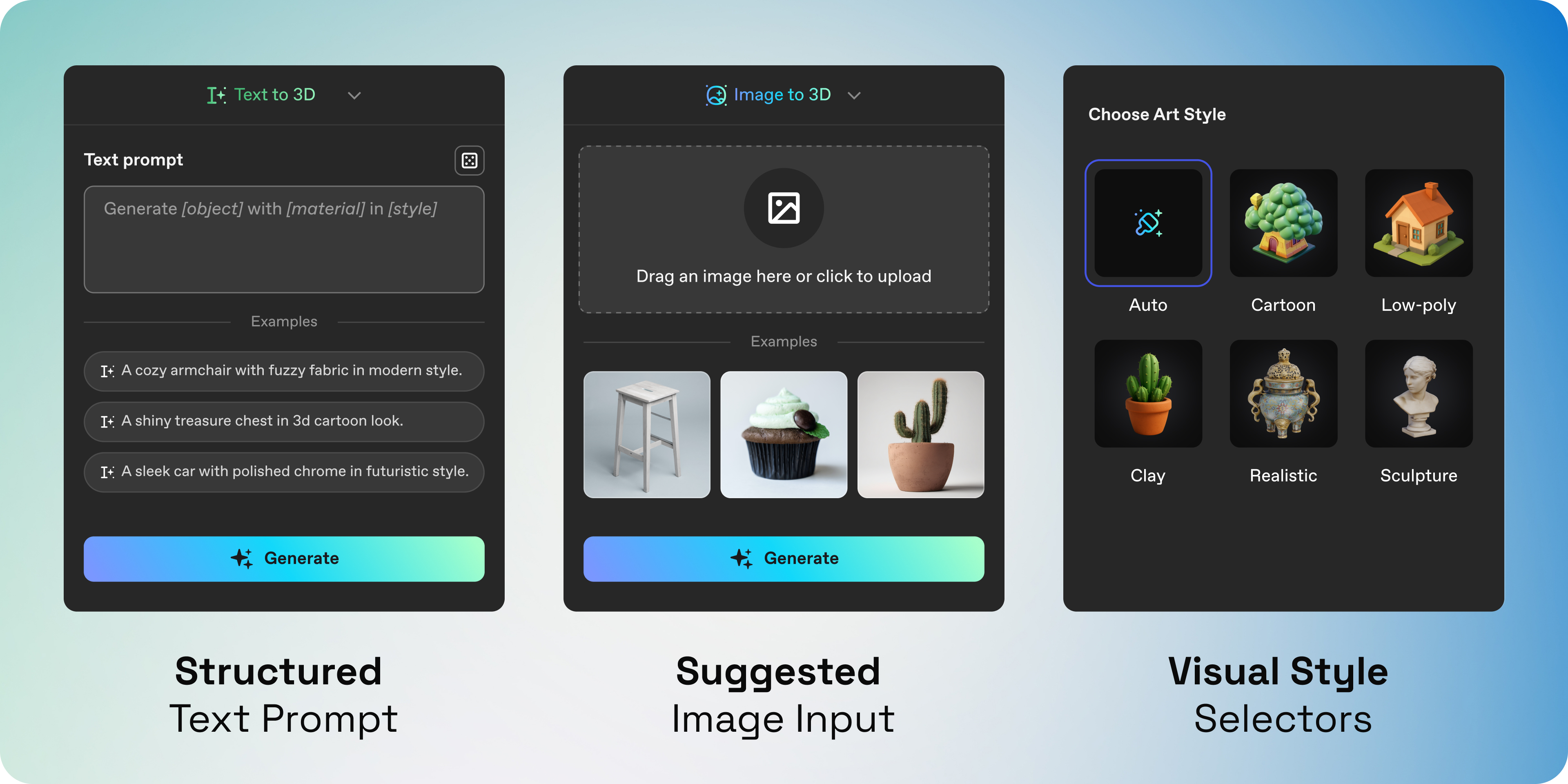
Input — Expressing Intent
Guide users to effortlessly translate abstract ideas into AI-understandable input.
Stage 3
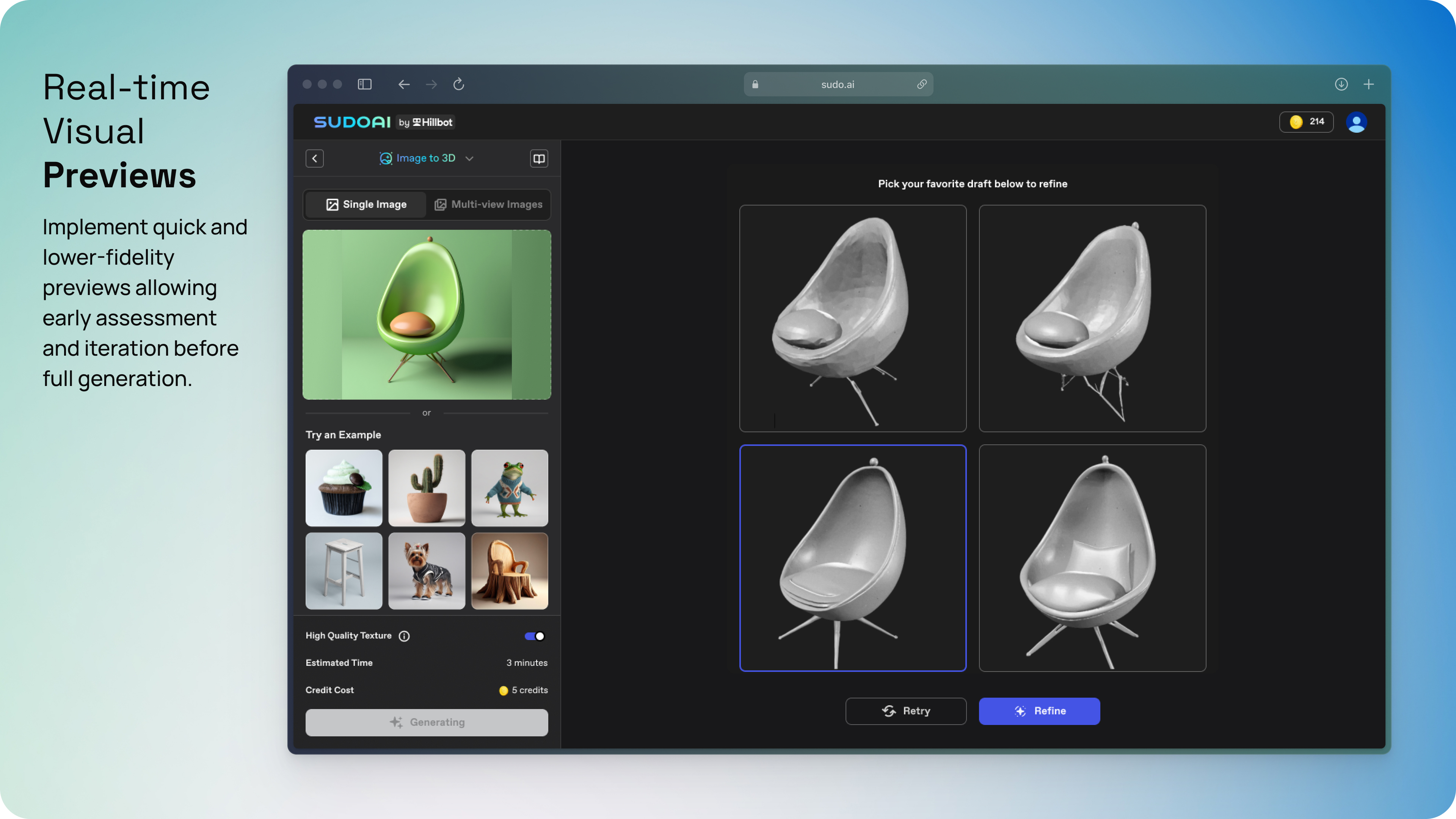
Process — Real-time Guidance
Manage user anxiety during AI generation and provide transparency and control during the 'black box' process.
Stage 4
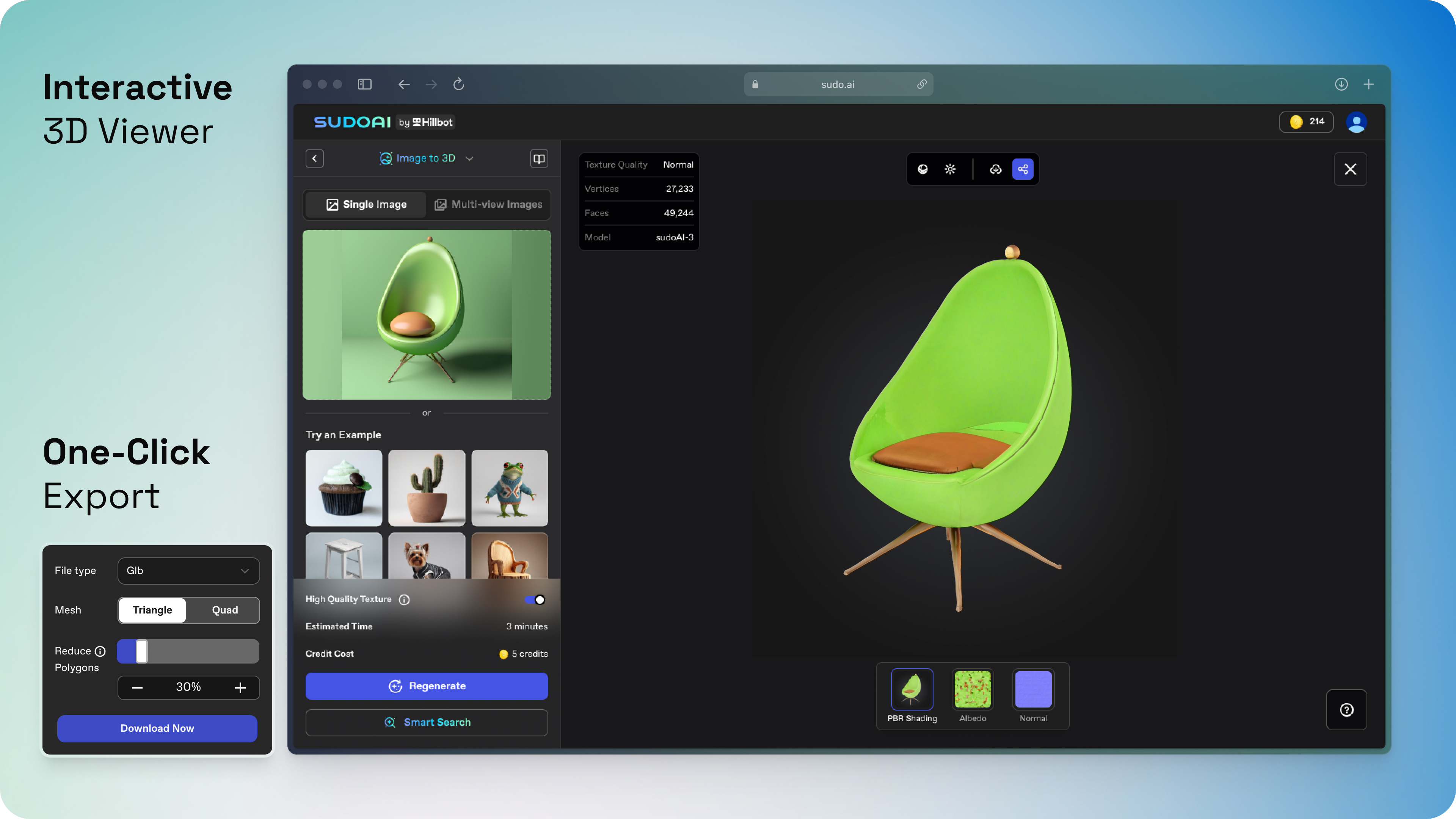
Output — Tangible Results & Quick Application
Clearly present the AI's creation and enable immediate applications for the generated model.
The Outcomes & Impact
Rapid Adoption & Positive User Validation
In just 3 months, we went from initial prototype to public launch. This rapid development cycle delivered on our vision of making rapid 3D creation possible for everyone, from indie devs to first-time creators.
The impact of making AI-powered 3D creation accessible was immediate and measurable:
• Rapid Adoption & Usage: Within weeks of launch, users were generating 1K+ 3D models daily — a workflow that would have months with traditional tools.
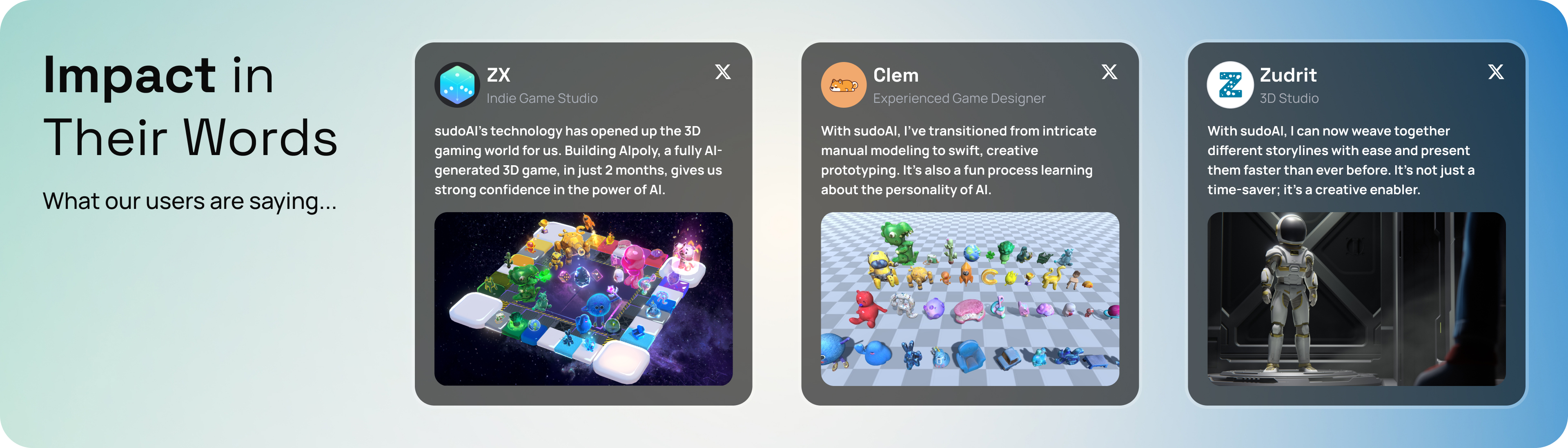
• Positive User Validation: The intuitive user experience designed for this early-stage AI resonated strongly with 3d creators.
KEY TAKEAWAYS
Addressing AI's Unique Challenges
Designing for AI-native products presents unique challenges compared to traditional software, primarily due to AI technology’s uncertainty and possibilities of making mistakes. Navigating this required specific design strategies focusing on intentional friction and recovery from error.
⏳ Add intentional friction (it's a good thing!)
To help users build trust and a new mental model for interacting with generative AI, we strategically introduced intentional friction at key moments. Implemented a preview step showing multiple early-stage outputs before committing to a full generation. This empowered users to review options, understand the AI's potential range, and feel ownership over the chosen direction before investing time and resources.
🔎 Enable recovery (when it’s wrong)
Recognizing that AI outputs will be "off" or fail, designing effective recovery pathways was crucial for user satisfaction and workflow continuity. Developed strategies to ensure users could easily recover if the output failed or felt off. By integrating a Smart Search fallback, users could quickly search for similar open-source models directly within the tool, ensuring they still found value even when AI generation didn't meet their needs.
🔭 The path forward
Designing SUDOAI revealed that product design for AI is fundamentally about anticipating and building for the technology's evolution – the "Arc of AI." The focus shifts from static interfaces to designing for user intent and building adaptable systems.